ECE Research Seminar – March 20, 12-1 p.m.
March 6, 2026
Please join us for our March 2026
ECE Research Seminar
March 20, 2026, Friday, 12:00 – 1:00 pm, Simrall 104
https://msstate.webex.com/msstate/j.php?MTID=m2b6d27a00e866099e4851d2e5806c297
Enabling Autonomous Driving in Complex Off-Road Environments
Lalitha Dabbiru | ld212@msstate.edu
Abstract: Research efforts to achieve autonomous driving capabilities have improved significantly in the past decade. There has been abundant research in the field of structured, on-road autonomous vehicles supported by several benchmark datasets that capture the variability of urban and highway environments. However, there remains a paucity of annotated datasets for unstructured, off-road terrains. Off-road autonomous navigation is very challenging due to its complex and highly variable terrain conditions, including forests, uneven ground surfaces, and hidden obstacles such as ditches, boulders, fallen tree trunks and dense vegetation. Robust obstacle detection and avoidance are very crucial for accurate traversability estimation. Integrating semantic segmentation and object detection into autonomous perception pipelines can significantly enhance system performance in these complex and dynamic environments. This talk presents a multi-modal perception framework that leverages complementary sensor modalities – including cameras, LiDAR, radar, and thermal imaging to improve object detection, classification, and terrain interpretation. The presentation highlights methods for semantic segmentation and object detection in off-road environments. Deep learning models are trained and validated using real-world datasets collected at the Center for Advanced Vehicular Systems (CAVS) proving grounds.

Studio portrait of Lalitha Dabbiru
(photo by Beth Wynn / © Mississippi State University)
Dr. Lalitha Dabbiru is an Assistant Research Professor in the Center for Advanced Vehicular Systems (CAVS) and an Adjunct Faculty member in the Department of Electrical and Computer Engineering at Mississippi State University. Her research interests span machine learning and deep learning for autonomous systems, with a focus on multi-modal sensing and perception using cameras, radar, LiDAR, and thermal imaging. She has led research efforts in areas including advanced driver-assistance systems (ADAS), levee anomaly detection, small satellite engineering, and semiconductor fabrication. In addition to her research, Dr. Dabbiru is actively engaged in teaching, offering one to two courses each semester in the Department of Electrical and Computer Engineering at Mississippi State University.
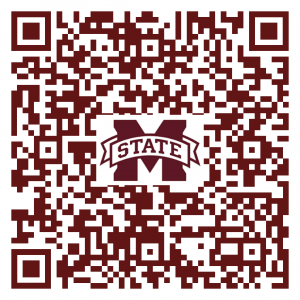
* For further information, contact: For WebEx access,scan the QR code:
Dr. Jenny Du | du@ece.msstate.edu | 5-2035